
Approaching the Gist
Reading Gurdjieff’s The Arousing of Thought with Trent
Five Tuesdays, January 5 to February 2, 2027
9–11 AM Pacific (5–7 PM GMT), live on Zoom

What happens when we return to a sentence we thought we understood?
Over five weeks we read The Arousing of Thought, the opening chapter of Beelzebub’s Tales to His Grandson, slowly and closely, in the company of other readers. Meditation and reflection help us notice our own experience as we read.
Why begin here?
Gurdjieff gave exceptional care to the doorway into his writings. His German translator, Louise March, recalled that he wrote and rewrote The Arousing of Thought as many as twelve times. It asks us to notice not only what we read, but how we read.
Sources: Louise March’s account (1950) and Chapter I in the 1950 text
Who this is for
This circle is for serious students, especially those with a deep grounding in the personality Enneagram who want to go further into Gurdjieff’s teaching. It asks for patient time with a demanding, sometimes puzzling text. You don’t need to have read Gurdjieff before, only a real wish to work with him.
P. D. Ouspensky’s In Search of the Miraculous makes a good companion; Gurdjieff’s pupils recalled that he praised its faithfulness. Read the recollections.
How do we read Gurdjieff?
The course
The heart of this reading circle is learning how to read Gurdjieff, in ways you can keep using long after our five weeks and that lead to your own insights. Trent offers context from Gurdjieff’s teaching and from ancient literary structures, with frameworks and charts as a guide and plenty of room for your questions and discoveries.
Syllabus
- Session 1 · January 5
Introduction and Literary Structure
How we approach the chapter: notice patterns and develop a practice of close reading. Exploring ancient literary techniques.
- Session 2 · January 12
How to Begin
Gurdjieff’s opening, his difficulties in beginning, and the relationship he establishes with his reader. Meditations on languages and translation.
- Session 3 · January 19
The Kurd and the Red Pepper
Desire, persistence, suffering, and the encounter between an allegory and its reader. Meditations on suffering.
- Session 4 · January 26
Gurdjieff’s Birth Narrative and Formative Experiences
The birth narrative and formative experiences, exploring habit, individuality, and conscious action. Using our own origin stories in doing our Work.
- Session 5 · February 2
Karapet of Tiflis and Gurdjieff’s Signature
Awakening, resistance, and the chapter’s closing encounter with its author. Tuning into subtle levels of knowing.
Three readings
In the “Friendly Advice” that opens the book, Gurdjieff asks readers to “read each of my written expositions thrice”:
- “Firstly, at least as you have already become mechanized to read all your contemporary books and newspapers.”
- “Secondly, as if you were reading aloud to another person.”
- “And only thirdly, try and fathom the gist of my writings.”
These three readings run through all five meetings.
The practical details
| Dates | Tuesdays, January 5, 12, 19 and 26, and February 2, 2027 |
|---|---|
| Pacific | 9–11 AM |
| Eastern | 12 noon–2 PM |
| UK and Ireland | 5–7 PM |
| Central Europe | 6–8 PM |
| Eastern Europe | 7–9 PM |
| Where | Live on Zoom. The link comes with your confirmation. |
| Preparation | Read the whole chapter before the first meeting, and allow an hour or two between meetings to reread and reflect. |
| The text | Beelzebub’s Tales to His Grandson in the original 1950 translation, such as the 1999 Penguin Arkana paperback (ISBN 9780140194739) or the earlier E. P. Dutton editions. Please avoid the 1992 revised translation. |
Our time together is mostly facilitated discussion and close reading, with brief talks. Conversation and personal sharing are never recorded.
Register
If you need assistance, you are welcome to choose the supported rate of $150. If you can offer more, the supporter rate of $200 helps make that possible. Every rate includes the same sessions, teaching and materials.
Thank you.
Your registration has been received. One step remains: payment.
Trent will confirm your place by email, with the private Zoom details, once your payment arrives.
If the payment button does not open, please write to livingenneagram@gmail.com.
Interested, but the time doesn’t work?
Tell us your time zone and the days or times that would suit you. It takes a minute, needs no payment and helps plan future times.
Your guide

Trent J. Thornley has long studied G. I. Gurdjieff’s life, writings and teachings, and has practiced the Gurdjieff Movements on retreat. He is especially drawn to what a sacred text reveals when read slowly, with attention to its structure. His master’s thesis at the Graduate Theological Union traced the mirror-image literary structure of the Buddha’s Discourse on the Noble Search.
A teacher, chaplain and certified CPE educator, Trent is a past president of the International Enneagram Association and a student of the Enneagram since 2013. He lives in San Francisco.
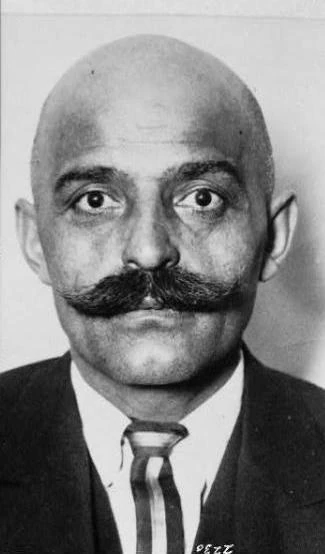
Portrait of G. I. Gurdjieff: Janet Flanner–Solita Solano papers, Library of Congress (95507085), via Wikimedia Commons. No known restrictions on publication.

Book cover: Beelzebub’s Tales to His Grandson, Penguin/Arkana, via Penguin Random House.
Approaching the Gist is offered independently by Living Enneagram. It is not affiliated with or endorsed by the Gurdjieff Foundation or any other organization, and it does not carry CPE credit or certification.